VisiFlora Review: Eye Health, Gut–Eye Axis & Benefits
VisiFlora Review: Eye Health, the Gut–Eye Axis & What the Science Really Says
VisiFlora is marketed as a daily eye-health supplement built around a broader “inside-out” view of vision support. The idea is interesting: nutrition, inflammation, the gut microbiome and the ocular surface can all interact with eye health. But the science is still evolving, so this review separates established evidence from emerging research and product marketing.
What Is VisiFlora?
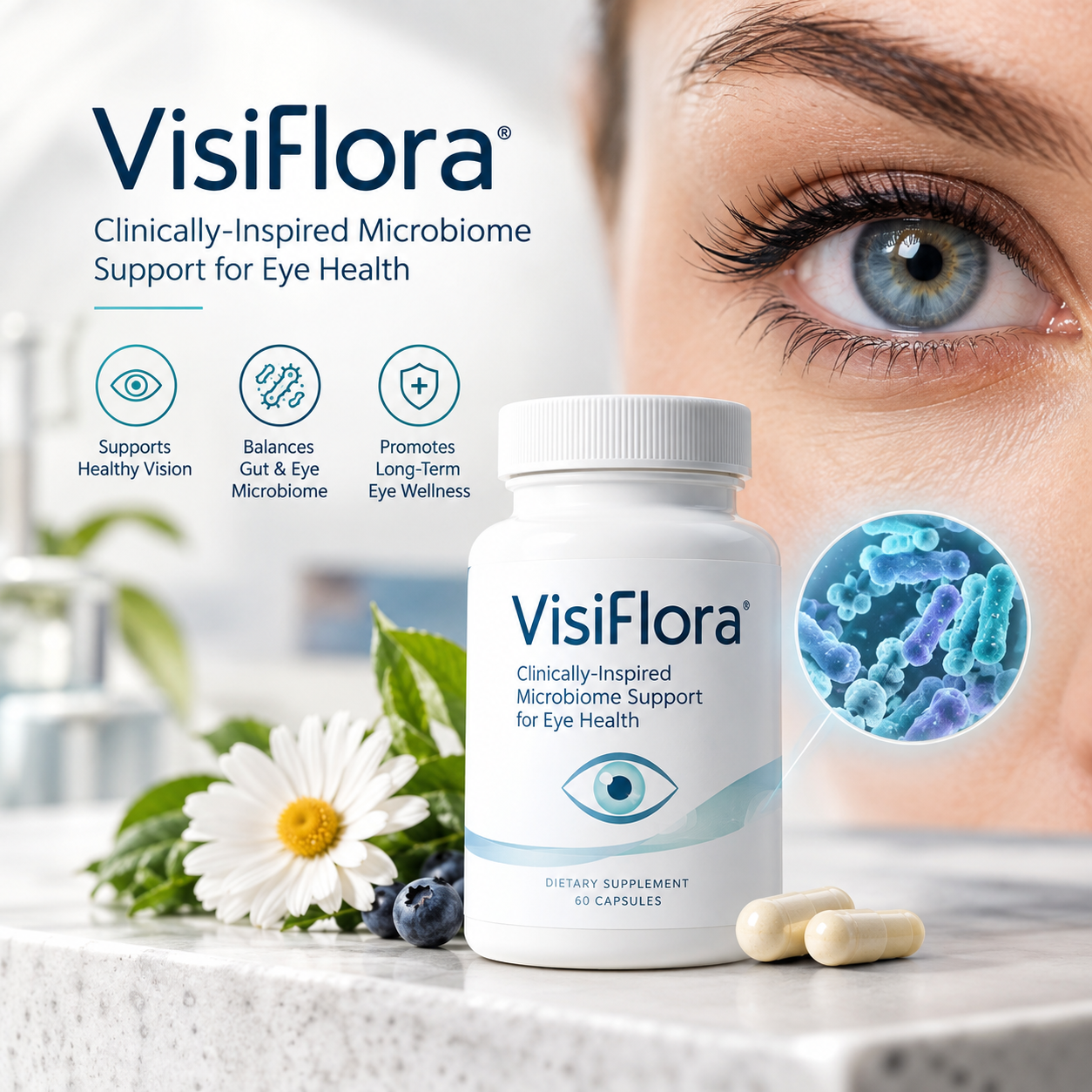
VisiFlora is marketed as an eye-health supplement intended to support visual comfort, retinal and macular health, and the biological systems that influence eye function. Current online VisiFlora sales materials emphasize a combination of eye-focused nutrients and a “gut–eye” approach rather than presenting the product as a prescription treatment.
What makes the concept different
Traditional eye supplements commonly focus on nutrients such as carotenoids, vitamins, minerals and antioxidants. VisiFlora’s marketing also emphasizes the gut–eye connection—the emerging idea that intestinal microbes and systemic immune signaling may influence ocular surface health.
What it should not be confused with
VisiFlora should not be described as a cure for dry eye, retinal disease, glaucoma, cataracts or vision loss. It should also not replace prescribed drops, contact-lens hygiene, routine eye examinations or medical treatment.
The Ocular Surface Microbiome: What We Actually Know
The eye is not simply a sterile surface. Modern sequencing research has identified a low-biomass microbial community on the ocular surface. Commonly reported organisms include genera such as Corynebacterium, Staphylococcus and Streptococcus. Researchers are investigating how these microbial communities interact with tear-film biology and local immune defenses.
Low-biomass ecosystem
The ocular microbiome contains far fewer microorganisms than the gut, which makes measurement difficult and increases the risk of contamination in research.
Immune interaction
Ocular-surface microbes appear to interact with local immune signaling and barrier defenses, but researchers are still defining what a “healthy” core microbiome looks like.
External influences
Age, disease, medications, hygiene and contact-lens wear may alter the ocular microbial environment. The clinical meaning of these changes is still being studied.
The Gut–Eye Axis: Promising Science, but Still Emerging
A 2024 review in BMC Ophthalmology examined the relationship between gut microbiota and dry eye disease. The literature supports a biologically plausible connection involving immune regulation and inflammation, but the field remains young and researchers continue to call for better controlled clinical trials.
This makes the gut–eye axis a legitimate research topic—but not a shortcut to claiming that one supplement has been proven to reverse dry eye or restore vision. World-class health content should preserve that distinction.
Contact Lenses, Dry Eye & the Microbiome
Contact-lens wear is one area where the ocular microbiome has received serious attention. A 2026 literature review found that contact-lens wear is associated with measurable changes in ocular bacterial communities, although study methods and results remain heterogeneous. A separate 2026 research article also noted that the relationship among contact lenses, the ocular microbiome, tear proteins and dry-eye symptoms remains complex and incompletely understood.
| Factor | What research supports | What should not be claimed |
|---|---|---|
| Contact-lens wear | Can alter the ocular-surface microbial profile and tear environment. | That supplements have been proven to “restore” a lens-wearer’s microbiome. |
| Dry eye | Is multifactorial and involves tear-film instability and inflammation. | That microbiome imbalance is the sole cause of dry eye. |
| Screen use | Can contribute to eye strain and dryness, largely through reduced blinking and prolonged near work. | That screen use has been proven to directly damage the ocular microbiome. |
What Benefits Could VisiFlora Reasonably Support?
The safest and most professional way to describe VisiFlora is as a nutritional supplement that may complement an eye-health routine. The strength of evidence depends on the exact ingredients and doses in the current formula.
Eye-comfort support
Some nutritional ingredients used in eye-health supplements are studied for antioxidant protection and ocular comfort. The benefit depends on the formula and the individual.
Antioxidant support
Carotenoids and antioxidant nutrients can play legitimate roles in eye nutrition. Product-specific claims should match the actual label and clinical evidence.
Gut–eye research interest
Microbiome research suggests an interesting connection between intestinal health, inflammation and the ocular surface, but this remains an emerging area rather than established treatment.
Claims we would avoid
- “VisiFlora restores the ocular microbiome.”
- “VisiFlora fixes chronic dry eye at the root cause.”
- “VisiFlora improves vision clarity within a specific number of weeks.”
- “VisiFlora prevents retinal disease or age-related vision loss.”
- “VisiFlora reduces inflammation markers on eye exams.”
Those statements require direct, high-quality clinical evidence on the finished product—not just research on the microbiome or individual ingredients.
Who Might Consider VisiFlora?
Potentially relevant for
- Adults looking for an additional nutritional layer in their eye-health routine.
- People with high screen exposure who are already addressing ergonomics, blinking and regular breaks.
- Contact-lens wearers who want general nutritional support while maintaining excellent lens hygiene.
- Adults interested in emerging gut–eye research.
See an eye-care professional first if
- You have persistent or worsening dry eye.
- You have eye pain, marked redness or light sensitivity.
- You notice sudden floaters, flashes or a curtain/shadow in vision.
- Your vision changes suddenly or progressively.
- You have a diagnosed eye condition or use prescription eye medication.
How to Use VisiFlora Responsibly
Because different online VisiFlora pages list different serving instructions, the most reliable rule is simple: follow the current label supplied with the exact product you purchase. Do not publish a fixed “two capsules daily” instruction unless the bottle and checkout page confirm it.
VisiFlora vs. a Traditional Eye Vitamin
| Feature | Traditional eye supplement | VisiFlora positioning |
|---|---|---|
| Primary idea | Direct nutritional support for eye tissues. | Eye nutrition plus a broader gut–eye wellness narrative. |
| Antioxidants / carotenoids | Commonly included. | Appears in current VisiFlora marketing; verify current label. |
| Microbiome emphasis | Usually limited. | Central to some VisiFlora marketing language. |
| Clinical status | Varies by formula and ingredient. | Dietary supplement; not a treatment for eye disease. |
What About “Real User Results”?
Testimonials can help readers understand practical issues such as taste, capsule size, ordering, shipping and customer service. They should not be used as proof that VisiFlora improves visual acuity, reduces ocular inflammation, reverses dry eye or changes clinical exam findings.
Useful testimonial information
- Ease of taking the supplement
- Shipping experience
- Customer support responsiveness
- Refund experience
- General subjective comfort
Claims to treat cautiously
- “My prescription improved because of VisiFlora.”
- “My floaters disappeared.”
- “My retinal disease reversed.”
- “My dry-eye scores normalized.”
- “I no longer need eye treatment.”
Where to Buy VisiFlora & the Money-Back Guarantee
Current VisiFlora sales pages commonly advertise a 60-day money-back guarantee. Pricing, bottle counts, dosage and shipping conditions vary across sales pages, so readers should verify the exact terms shown at checkout before purchasing.
Check the Current VisiFlora Offer
Review the current ingredient label, serving directions, price, shipping terms and guarantee on the exact sales page before placing an order.
View the Current VisiFlora OfferVisiFlora: Strengths and Limitations
What is appealing
- Modern “inside-out” eye-health positioning.
- Connects nutrition with an emerging gut–eye research field.
- Easy to incorporate into a daily routine if the label is appropriate for you.
- Current sales materials advertise a 60-day refund window.
- Can complement—not replace—standard eye care.
What requires caution
- The ocular microbiome field is still evolving.
- Gut–eye research does not automatically validate a specific commercial formula.
- Online VisiFlora pages contain inconsistent product details.
- Testimonials are not clinical evidence.
- Any strong disease or vision-improvement claims need product-specific trials.
Is VisiFlora Worth Considering?
The science behind the ocular microbiome and the gut–eye axis is real enough to deserve attention—but it is still an emerging field. VisiFlora’s positioning is therefore more credible when described as nutritional support inspired by developing microbiome research, rather than as a proven treatment that “fixes” the eye microbiome.
For an adult who already practices good eye care and wants to explore an additional nutritional strategy, VisiFlora may be worth reviewing with a healthcare professional after checking the exact label. Anyone experiencing persistent dry eye, pain, significant redness or changes in vision should prioritize a proper eye examination.
Frequently Asked Questions
Does the eye really have a microbiome?
Current sequencing research supports the presence of a low-biomass ocular-surface microbial community, although its exact composition and clinical significance are still being defined.
Can probiotics or microbiome supplements treat dry eye?
Microbiome-based approaches are being investigated, especially through the gut–eye axis, but the evidence is not strong enough to treat supplements as a replacement for established dry-eye evaluation and care.
Is VisiFlora a probiotic?
Online VisiFlora descriptions are inconsistent. Some marketing emphasizes the gut–eye connection, while other pages present the formula mainly as vitamins, antioxidants and botanicals. Check the current product label on the exact offer page before describing it as a probiotic formula.
How long does VisiFlora take to work?
There is no scientifically guaranteed timeline for an individual result. Avoid publishing fixed claims such as “week 1–2” or “week 6+” unless supported by product-specific clinical data.
Does VisiFlora have a money-back guarantee?
Current sales pages advertise a 60-day money-back guarantee. Always verify the terms on the checkout page because refund and shipping conditions can change.
Research & Source Notes
This article separates product marketing from broader scientific evidence. Research on the ocular microbiome or gut–eye axis should not be interpreted as direct proof that the finished VisiFlora product produces a specific clinical outcome.
- Song J, et al. “What is the impact of microbiota on dry eye: a literature review of the gut-eye axis.” BMC Ophthalmology, 2024.
- De Luca L, et al. “The Ocular Surface Bacterial Microbiome and the Impact of Contact Lens Use: A Literature Review.” Microorganisms, 2026.
- Kopp OS, et al. “Impact of contact lenses on the ocular surface microbiome, tear proteome, and dry eye disease.” Microbiology Spectrum, 2026.
- Okonkwo A, et al. “Next-Generation Sequencing of the Ocular Surface Microbiome: In Health, Contact Lens Wear, Diabetes, Trachoma, and Dry Eye.” Eye & Contact Lens, 2020.
- Current VisiFlora sales materials were reviewed for product positioning and guarantee information; verify the exact current product label before publication.