
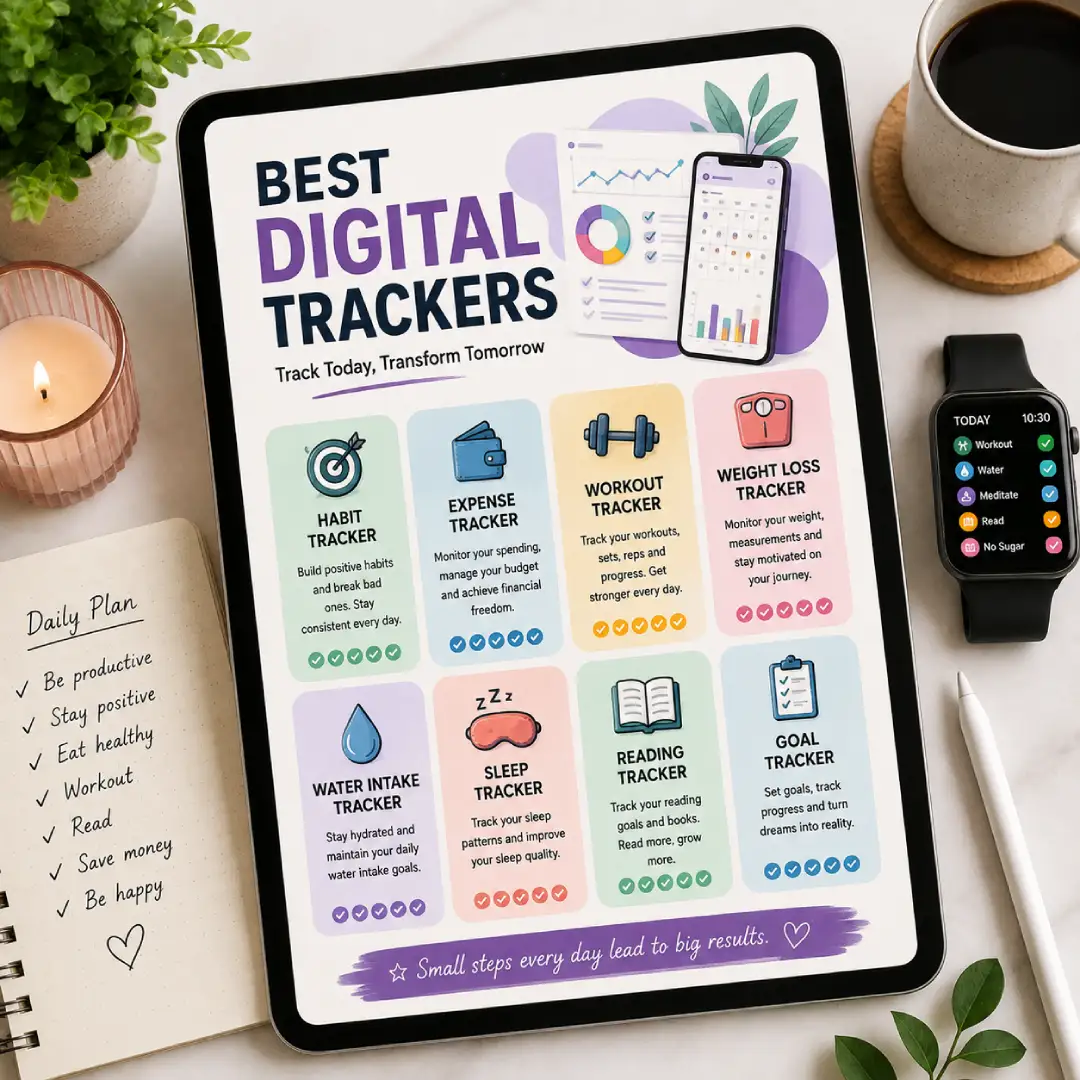
Best Digital Trackers for Productivity, Habits & Goal Tracking
Big goals rarely happen because of one dramatic moment.
They happen through small, consistent actions repeated long enough to create real progress.
Whether you’re building healthier habits, organizing your finances, improving productivity,
or working toward a personal goal, one of the simplest ways to stay on track is to make your progress visible.
That’s where digital trackers come in.
They make it easier to record what you’re doing, spot patterns, measure improvement,
and stay accountable without relying on memory or scattered notes.
What gets tracked becomes easier to understand—and what you understand becomes easier to improve.
What You’ll Discover in This Guide
- What digital trackers are and how they work.
- Why tracking can improve focus, consistency, and organization.
- The most useful types of digital trackers.
- How to get better results from your tracker.
- What to look for when choosing a digital tracking system.
What Are Digital Trackers?
Digital trackers are downloadable templates or interactive tools designed to help you monitor
specific activities, habits, goals, routines, or measurable results.
They can be used on tablets, smartphones, laptops, or desktop computers and may include
editable fields, calendars, checklists, charts, progress indicators, and goal-setting sections.
Unlike many paper-based systems, digital trackers can often be reused, duplicated, customized,
and updated without creating additional clutter.
Why it matters:
A good tracker turns an abstract goal into something visible.
Instead of saying “I want to be more productive,” you can see exactly what was completed,
how consistently you followed through, and where adjustments may be needed.
Benefits of Using Digital Trackers
01
Build Better Habits
Recording habits consistently can help you see how often you’re following through
and make routines easier to maintain over time.
02
Increase Productivity
Tracking tasks, priorities, and completed work can help reduce mental clutter
and keep attention focused on what matters most.
03
Improve Financial Awareness
Expense and budget trackers can make spending patterns easier to see,
helping you make more intentional financial decisions.
04
Stay Motivated
Visible progress can be encouraging.
Seeing consistent improvement often makes it easier to continue working toward a goal.
05
Stay Organized
A digital system keeps your information in one place so you can review previous records,
compare progress, and manage goals more efficiently.
06
Spot Patterns Faster
Tracking over time can reveal trends that are difficult to notice day to day,
helping you understand what is working and what may need to change.
Progress feels more achievable when you can see the steps you’ve already taken.
Popular Types of Digital Trackers
There is no single tracker that works for every goal.
The most useful system is usually the one designed around the specific area you want to improve.
Habit Trackers
Monitor daily or weekly routines.
Expense Trackers
Record purchases and spending habits.
Budget Trackers
Plan income, expenses, and savings goals.
Fitness Trackers
Track workouts, training, or activity goals.
Water Intake Trackers
Monitor daily hydration habits.
Sleep Trackers
Record bedtime, sleep duration, and patterns.
Mood Trackers
Observe emotional patterns over time.
Reading Trackers
Organize books, reading goals, and progress.
Study Trackers
Track study sessions, subjects, and goals.
Business Goal Trackers
Measure targets, actions, and milestones.
Project Trackers
Monitor deadlines, tasks, and project stages.
Personal Growth Trackers
Track routines, goals, reflection, and development.
✦
How to Get Better Results From a Digital Tracker
A tracker is only useful if it becomes part of your routine.
The goal is not to create more work—it is to make progress easier to see and manage.
- Update your tracker consistently.
- Choose goals that are realistic and measurable.
- Keep the system simple enough that you’ll actually use it.
- Review your progress at least once a week.
- Celebrate small wins instead of waiting only for major milestones.
- Look for patterns rather than judging one imperfect day.
- Adjust your approach when the data shows something isn’t working.
- Focus on consistency rather than perfection.
Your tracker should support your life—not become another task you feel guilty about completing.
What to Look for in a Good Digital Tracker
A beautiful design is helpful, but functionality matters even more.
Before choosing a tracker, consider whether it will actually fit your routine.
01
Simple Layout
A clean design should make information easy to enter and review without feeling overwhelming.
02
Clear Purpose
The tracker should be built around a specific outcome, habit, or category you actually want to monitor.
03
Easy to Update
If updating the tracker takes too long, you’re less likely to use it consistently.
04
Useful Progress View
Look for summaries, visual progress, checkboxes, charts, or other features that help you see improvement.
Why Explore Digital Trackers With Prime Nova Digitals?
Prime Nova Digitals focuses on practical digital resources for productivity,
organization, wellness, finance, education, and personal development.
The goal is simple: help you find digital tools that are attractive enough to enjoy using
and practical enough to support your everyday routines.
Whether you’re organizing a daily schedule, improving a habit, monitoring expenses,
or working toward a long-term goal, the right digital tracker can give you a clearer picture
of where you are and where you’re going.
Ready to Make Your Progress Easier to See?
Explore digital tracking tools designed to help you stay organized,
focused, and more intentional with the goals that matter to you.
Final Thoughts: Small Actions Create Visible Progress
Digital trackers don’t do the work for you—but they can make the work much easier to understand.
By recording habits, finances, productivity, wellness routines, or personal goals,
you create a clear record of your actions and progress.
That information can help you make better decisions, stay accountable,
and recognize improvement that might otherwise go unnoticed.
The best tracker is not necessarily the most complicated one.
It is the one you can use consistently and confidently.
You don’t need to track everything. Track what matters—and let that awareness guide your next step.
Frequently Asked Questions About Digital Trackers
What is a digital tracker?
A digital tracker is a downloadable or interactive tool used to record,
monitor, and review habits, activities, goals, finances, routines, or other measurable information.
Are digital trackers better than paper trackers?
That depends on personal preference.
Digital trackers are often easier to duplicate, edit, store, and access across devices,
while some people prefer the physical experience of writing on paper.
What can I track digitally?
Common examples include habits, expenses, budgets, workouts, hydration,
sleep, mood, reading, study sessions, business goals, projects, and personal development goals.
How often should I update a digital tracker?
It depends on the tracker.
Daily trackers are usually most useful when updated each day,
while weekly or monthly trackers may only need occasional review.
How do I stay consistent with tracking?
Keep your tracker simple, attach it to an existing routine,
and focus on recording useful information rather than trying to create a perfect record.